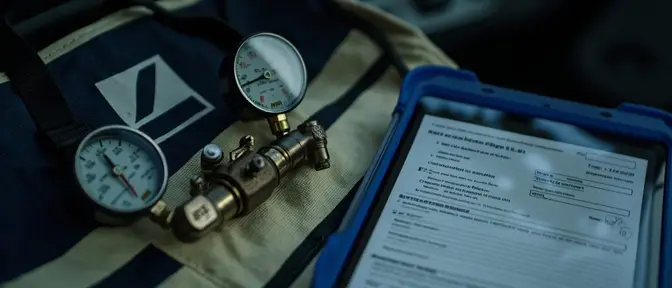
A 10-person field service contractor was paid $235,000 for licensing its work orders, technician notes, job photos and equipment service histories. This is one deal Origin helped place, not a forecast: what a buyer pays depends on the records, the rights, demand and the agreed scope.
- The smallest company in Origin's case studies, tied with a 12-person accounting firm.
- The records were the job file: work orders, technician notes, job photos and equipment service histories.
- Job photos and notes often show customers' homes and names. Those come out before any copy leaves.
- Licensing data does not sell the business. HVAC, plumbing and electrical owners can ask both questions separately.
What was a 10-person field service contractor paid for its data?
A 10-person field service contractor was paid $235,000 for licensing work orders, technician notes, job photos and equipment service histories. It is one deal Origin helped place and one outcome, not a forecast for another contractor.
Names stay private, and the deal record does not say which trade the contractor works in. What follows is general, sourced context for HVAC, plumbing, electrical and other service contractors: what the job file contains, what buyers publish, what has to come out first and how Origin works. See also data licensing for field service companies.
What records did the field service contractor license?
The four record types are the parts of a job file most contractors already keep in field service software. Handshake lists ServiceTitan among the "Examples of sources we buy" on its data partnership page (Handshake AI), and Origin has a guide to exporting ServiceTitan data.
| Record type | What it shows an AI model | What must be removed |
|---|---|---|
| Work orders | The complaint, the diagnosis, the parts used and the time on site, job after job | Customer names, addresses, phone numbers and payment details |
| Technician notes | How an experienced tech reasons from a symptom to a fix, in plain words | Names of customers and staff; any remarks about a person |
| Job photos | What the equipment, the fault and the finished repair look like | Faces, house numbers, vehicle plates and anything inside a home that identifies the occupant |
| Equipment service histories | How the same unit behaves across years of visits, so recurring faults stand out | The link from a unit to a named customer or street address |
What do AI companies do with work orders and job photos?
Published programs say they want records of real work. micro1 describes the most valuable datasets as ones that "capture real operational expertise, decision-making processes, and repeatable workflows that help AI systems learn how work is executed in real-world business environments." (micro1's published data partnership terms).
A service history is a long series of those decisions: a symptom, what the technician checked, what was replaced and whether the unit came back. Photos add what the fault looked like. Origin's guide to selling field service records covers this record type in more depth, and plumbing, HVAC and electrical recording covers the separate market for recording the work itself.
How much is a field service company's data worth?
In this deal, $235,000 for a 10-person contractor. That is one outcome; Origin's case studies list each deal on its own. The programs below publish general figures for company data, not a price for field service records.
These are what the programs publish, not offers. Handshake's estimate form adds: "This is an indicative estimate only and is not an offer to purchase your data." (Handshake AI; Mercor; micro1's published data partnership terms.)
| Published program | What it says about payment | Who it says it wants | Read on |
|---|---|---|---|
| micro1 company data partnerships | Payments "typically ranging from $100K to over $3M"; tiers start at "$100K-500K Qualified Enterprise Data Partnerships" | "established companies with 30+ full-time employees" | 12 November 2026 |
| Handshake AI data partnerships | "$100K to $4M+ payouts" | "companies with 20+ full time employees & 3+ years in operation" | 12 November 2026 |
| Mercor data monetization | No dollar range published; pay is "based on data volume, the tools you connect, and the depth of your data" | No field service category listed; pay depends on volume, tools and depth | 12 November 2026 |
Can a small HVAC or plumbing business sell its data?
This deal is one answer: a 10-person contractor was paid. Origin's case studies state that a 10-person field service contractor and a 12-person accounting and tax firm were each paid $235,000, a 15-person construction contractor was paid $320,000, and that years of linked records matter more than headcount.
Published programs are not all built for small firms. Handshake says it is looking for "companies with 20+ full time employees & 3+ years in operation" (Handshake AI), and micro1 for "established companies with 30+ full-time employees" (micro1's published data partnership terms). micro1 also says "There's no fixed minimum number of files, documents, or terabytes." and that "Companies with several years of records across multiple business systems are generally a stronger fit." For a small contractor, the question is how far back the job history goes and how complete it is. See also AI companies buying small business data.
Is this the same as an HVAC business valuation?
No. An HVAC business valuation, or a plumbing business valuation, prices the company you might sell: customers, service agreements, staff and earnings. A data license is a separate agreement over a prepared copy of records. The company keeps its records and keeps operating, and no ownership of the business changes hands.
If you are thinking about how to sell your HVAC business, read what is my business worth and how to sell a business. Origin also publishes HVAC profit margins and HVAC business owner salary for owners comparing numbers.
What has to be removed or checked first?
Field service records are full of customers' personal details, because every job happens at someone's address. Treat this as a list for your lawyer, not legal advice.
- Customer identity. California's privacy law counts "Identifiers such as a real name, alias, postal address, unique personal identifier, online identifier, Internet Protocol address, email address, account name" as personal information (Cal. Civ. Code 1798.140). Strip them from work orders and histories.
- Photos. The same law lists "Audio, electronic, visual, thermal, olfactory, or similar information." as personal information (Cal. Civ. Code 1798.140). Faces, house numbers and plates come out of job photos.
- De-identified means de-identified. Under the CCPA, "Deidentified" means information that "cannot reasonably be used to infer information about, or otherwise be linked to, a particular consumer" (Cal. Civ. Code 1798.140). A unit serial number tied to an address can still point to a household.
- Customer and manufacturer agreements. Service contracts, warranty programs and dealer agreements can limit how job data is used. Read them first.
Source: California Civil Code 1798.140 (CCPA definitions), checked 2026-11-12
How does the process work?
A contractor does not need to export its field service software or share any job file to start. Origin's four steps are set out on how it works. No files or system access are required to begin.
- Describe the company. Start with your company name, website and contact details, then add your industry, team size, country and the types of records your business has.
- Talk through the opportunity. Origin follows up and, together with you, organizes a Company Licensing Brief: categories, questions to resolve, unknowns and a possible next step. The brief is not a valuation, rights clearance or a receiving program's acceptance, and sometimes the right conclusion is that there is no clear route to pursue.
- Explore a relevant opportunity. Origin explains the proposed recipient and the company information to be shared. Your authorized contact approves that named introduction before it is made, and permission to introduce your company does not authorize access to records.
- Assess the terms. Your company reviews the proposed license and decides whether to proceed: the records, permitted uses, delivery requirements and payment conditions. The data licensing agreement guide lists the clauses to check.
What should a field service contractor do next?
Check how many years of work orders and photos your system holds and whether each job links to the equipment it touched. That is the first thing a review asks.
These are deals Origin helped place. Company and buyer names stay private, and each is an individual outcome, not a forecast for another company: what a buyer pays depends on the records, rights, demand and agreed scope. See all case studies.
Origin Data Partners works with companies that own data and helps get it bought. We are independent of the services on this page, and a buyer may pay us when a deal closes (how Origin is paid). See what your data is worth.
Does your company hold records like these? See what your data is worth.
Common questions
How much did a 10-person field service contractor get paid for its data?
A 10-person field service contractor was paid $235,000 for licensing work orders, technician notes, job photos and equipment service histories. It is one deal Origin helped place, not a forecast.
Can a small HVAC or plumbing business sell its data?
Small firms have been paid: Origin's case studies include this 10-person contractor at $235,000. Some published programs set minimums of 20 or 30 full-time employees, so the history and completeness of the records carry more weight for a small firm.
Do I have to sell my HVAC business to license its data?
No. A data license covers a prepared copy of records for a stated use. The company keeps its records and keeps operating, and ownership of the business does not change.
What must be removed from job photos before licensing?
Anything that identifies a customer or a worker: faces, house numbers, vehicle plates and personal items inside a home. California law counts visual information as personal information.
Which field service software records do AI buyers want?
Work orders, technician notes, job photos and equipment service histories. Handshake lists ServiceTitan among the sources it buys from. What matters most is that jobs link to equipment over several years.
Is a data license part of an HVAC business valuation?
No. A business valuation prices the whole company. A data license is a separate agreement and does not transfer ownership of the business.