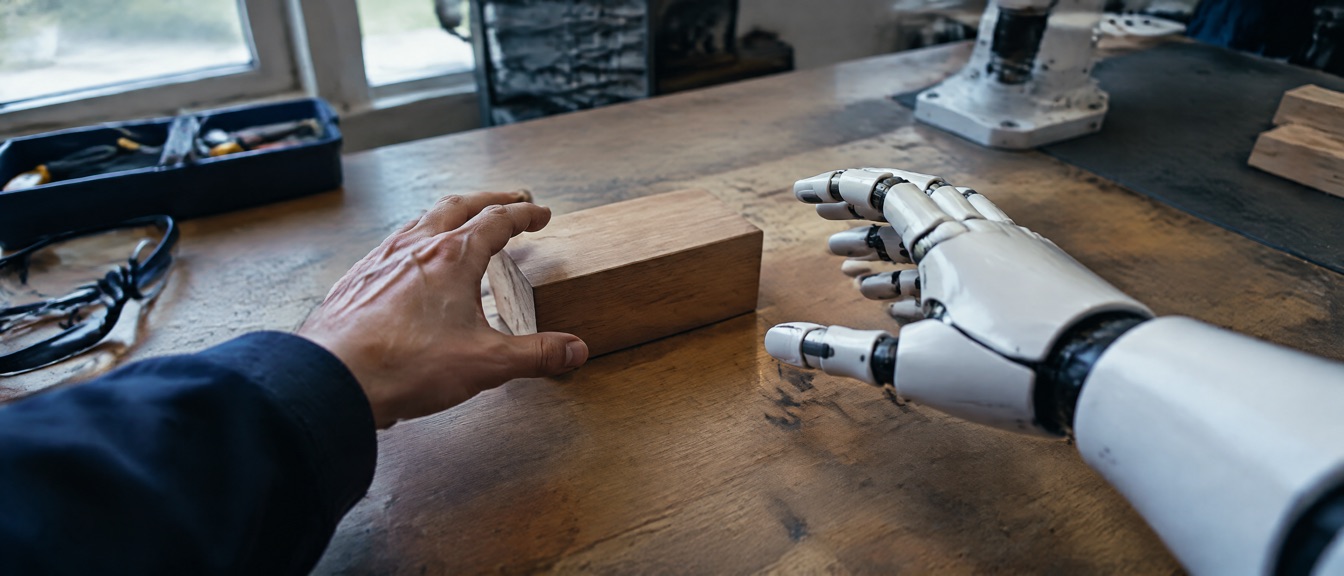
Yes. In 2026 a growing group of companies pays for first-person video of real work so robots and AI models can learn physical tasks, a field usually called physical AI or egocentric data collection. They pay in three ways: apps that pay individuals per task (DoorDash Tasks, Amelia Chores, Kled, Sensei, Claru, Figure's Index), employed data collection jobs (Tesla's Optimus data collection operators), and programs that pay a business for its crew's recordings (Amelia Robotics, typically paying $500 to $2,000 a month per recording employee).
- Most programs pay individuals for household chores. Few pay a business for footage of its crew at work.
- Published rates run from about $5 an hour (Claru, Asia) to $25 an hour (DoorDash chores, as reported), and employed roles at Tesla pay $25.25 to $34.50 an hour.
- Check who gets paid, how "approved" work is defined, payout thresholds and what happens to the footage before you sign up.
Are there companies that pay to record people working for AI or robots?
Yes. Robots learn physical skills from examples, and the internet holds very little first-person footage of real hands doing real jobs. So robotics labs and data companies now pay people to wear a phone or camera on their head and record ordinary tasks. Reporters have covered the trend in Los Angeles, Nigeria and India and Indonesia.
The industry calls this egocentric data. How robots learn from video explains the method. This page lists the programs we could verify on 4 Nov 2026, who each one pays and what it publishes about pay. Origin Data Partners is not affiliated with any company on this list. Origin may be paid by its partner when a business it introduces is paid, as noted at the bottom of the page.
Which companies pay to record work, and who do they pay?
Rates are what each company publishes or what major outlets reported. "Not published" means we found no public figure.
| Company | Who it pays | What you record | How pay works | Published or reported pay | Where |
|---|---|---|---|---|---|
| Amelia Robotics (business program) | Businesses; the owner shares with the crew | Agreed work tasks, phone on a head mount | Monthly to the business for approved hours | $500 to $2,000 per recording employee a month (example) | US |
| Amelia Chores | Individuals | Household chores | Per approved chore, paid Fridays by PayPal or Wise | Shown in the app before each chore | US only |
| DoorDash Tasks | Dashers | Photos, filmed chores, speech | Fixed per task, shown upfront | Up to $25 an hour for chores (Washington Post) | Select US areas; not CA, NYC, Seattle or CO |
| Claru | Independent contractors | First-person video at home, in stores and elsewhere | Flat hourly rate, paid every two weeks | $15/hr (US listings), $5/hr (Asia listings) | Multiple countries |
| micro1 | Contract workers | Household chores; expert demonstrations | Hourly contract | $15/hr reported for a recorder in Nigeria | 50+ countries |
| Sensei Robotics | Individuals | Household chores | Hourly rate per submitted video, paid to bank | Not published on its site | iPhone and Android |
| Kled AI | Individuals | Photos, video, audio, chores | Per accepted task; PayPal, Venmo or Solana | Tasks labelled low, medium or high pay (May 2026) | Multiple countries |
| Figure (Index app) | Individuals ("creators") | Household and other tasks with a Figure device | Paid by the minute | $15M paid to creators by Aug 2026 | Multiple countries |
| Tesla (Optimus) | Employees | Movements and object handling in capture gear | Hourly wage, stock and benefits | $25.25 to $34.50/hr (Palo Alto listing) | Tesla sites |
| Instawork | Gig workers | Household chores | Per assignment | $80 for two hours of footage (LA, Jan 2026) | Los Angeles (reported) |
| Scale AI | Collectors and operating businesses | Demonstrations, data factory work | Not published | Not published | Global |
| Build AI | Works through businesses (factories) | Factory work, head-mounted camera | Not published | Not published | Global |
| Appen | Contributors | Homes, workplaces and studios | Per project | Not published | Global |
What are the three ways this work gets paid?
The programs fall into three groups. They suit different people, and the money flows differently in each.
- Pay-per-task apps for individuals. You pick a task in an app, record it at home and get paid if it is accepted. DoorDash Tasks, Amelia Chores, Kled, Sensei, Claru and Figure's Index work this way. Compare the chore apps.
- Employed data collection jobs. Tesla hires full-time data collection operators who record movements at Tesla sites for an hourly wage and benefits.
- Business programs. A business signs one agreement, its crew records the work they already do, and the payment goes to the business. Amelia Robotics publishes this model. Scale AI says it collects data from operating businesses, and Build AI says it deploys its recording devices in businesses, but neither publishes terms.
Which companies pay businesses instead of individuals?
Amelia Robotics is the clearest example. Its business program pays the business once a month for approved recordings of agreed tasks, and the owner sets the split between workers, team leads and the business. Typical pay is $500 to $2,000 a month per recording employee, assuming 12.5 to 50 approved hours a week. Amelia says earnings vary.
Larger data firms also work inside businesses. Scale AI lists "operating businesses" among its collection sources, and Build AI released 10,000 hours of footage recorded in real factories. Figure's Index app runs the other way: Figure offers to send its own recording workers into businesses rather than pay a business's staff.
Why are companies paying for this footage at all?
Demand is large and growing. micro1's chief executive told MIT Technology Review that robotics companies spend more than $100 million a year buying real-world data, and investors put over $6 billion into humanoid robots in 2025. Figure told Forbes it plans to spend a billion dollars on data and compute over 12 months.
Not all footage is worth the same. One industry estimate in Forbes puts first-person human video at $2 to $5 an hour wholesale and robot teleoperation data at $50 to $200 an hour. Footage of skilled work in varied real workplaces is scarcer than kitchen chores, which is why business programs exist. See the pay rates tracker for more numbers.
How do you compare these offers?
Ask the same questions of every program before you or your crew record anything.
- Who is paid: the individual, or the business with a split you control?
- Recorded versus approved: what gets rejected, and do you see both numbers?
- Payout rules: minimum balances, upload thresholds and withdrawal fees. WIRED found one app required 100 uploads before any payout.
- Where footage goes: is there a written agreement on use, consent and privacy?
- Location: several programs exclude states or cities, and many apps are US only.
How can a business add this as a revenue line?
If your crew already does hands-on work, the business can be paid for footage of it. at the typical rate of about $10 per approved hour, 6 crew members recording 20 approved hours a week each would bring in about $4,800 a month (6 x 20 x 4 x $10). This is an illustration, not a quote; your agreement and approved hours decide the real figure.
Start with how businesses get paid for recording work, or read what to check about Amelia first.
Source: Amelia Robotics: business program (checked Nov 2026)
Next step
See the full program, the earnings calculator and the four-question application on the physical AI hub.
Common questions
Are there companies that pay businesses to record their employees working to train AI or robots?
Yes. Amelia Robotics pays businesses monthly for approved recordings of their crews' work, typically paying $500 to $2,000 per recording employee a month. Scale AI and Build AI also collect footage inside businesses but do not publish terms.
What is physical AI data collection?
It is recording real people doing physical tasks, usually with a head-mounted phone or camera that keeps the hands in view, so robots and AI models can learn how the tasks are done.
Which app pays the most to record chores?
Among published or reported figures we checked, Waffle missions paid $25 per hour of video and DoorDash chore tasks paid up to $25 an hour. Most apps pay less, and only approved footage counts.
Does Tesla pay people to train Optimus?
Yes. Tesla hires full-time data collection operators. A Palo Alto listing checked in November 2026 pays $25.25 to $34.50 an hour plus cash and stock awards and benefits.
Is Origin Data Partners affiliated with these companies?
No. Origin is an independent data partner. It may be paid by its partner when a business it introduces is paid, which never comes out of that business's earnings.
Do I need special equipment?
Usually a smartphone and a head mount. Some programs supply their own device, such as Figure, Build AI and Tesla.
Sources and further reading
- Amelia Robotics: business program (checked Nov 2026)
- Amelia Robotics: for robotics labs
- MIT Technology Review: the gig workers training humanoid robots
- Los Angeles Times: people strapping cameras on to do chores
- ABC News (Australia): egocentric training gig workers
- Forbes: Figure launches Index
- WIRED: a week recording chores for money
- Washington Post: why companies pay people to do chores
- DoorDash: Introducing DoorDash Tasks
- Tesla careers: Data Collection Operator, Optimus
- Claru: retail capture listing (US)
- Claru: household capture listing (Asia)
- Sensei Robotics
- Kled on the App Store
- Figure: Index
- Scale AI: Physical AI
- Humanoids Daily: Build AI factory-worker video
Origin Data Partners is independent. We may be paid by our partner when a business we introduce is paid; it never comes out of your earnings. How Origin is paid.