Usually not. The business that runs the cameras holds the recordings, but holding a file is not the same as having the right to license the people in it. Security footage shows customers, staff and passers-by who were told the cameras were there for safety. Biometric, privacy and recording laws restrict selling footage of identifiable people, and buyers avoid it. What AI companies pay a business for in 2026 is different: first-person video of skilled work, recorded by workers who agreed to it for that purpose. If your crew does hands-on work, ask about that instead.
- The camera operator controls the recordings. That does not give it the right to sell footage of people who never agreed to be in a training dataset.
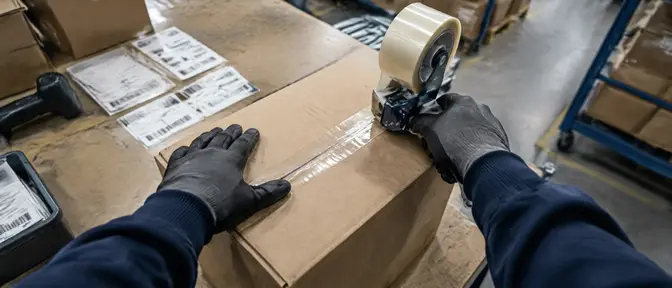
- Fixed overhead cameras see the tops of heads and the backs of hands. Buyers pay for the worker's own view of the task, with hands and tools in frame.
- Do not send an existing security archive to anyone. Ask instead what your crew could record on purpose, with written consent.
Who owns security camera footage?
The business or person that runs the camera system holds the recordings and decides who sees them. That control is practical, not absolute. It does not include a right to sell or license the people who appear in the footage.
Three things complicate "ownership". First, the system may not be yours: a landlord, a shopping centre or an alarm company often runs the cameras, and a cloud video service holds the files under its own terms. Read those terms before you assume you can export anything. Second, copyright in footage from a fixed, automatic camera is unsettled in the United States, because copyright protects human authorship. The Copyright Office's practice manual says that to qualify as a work of authorship "a work must be created by a human being" (Compendium of U.S. Copyright Office Practices, chapter 300). Third, and most important, the people in the footage have rights of their own under privacy, biometric and recording laws. Those are covered below.
This is a summary of what the rules say, not legal advice. Check your own state and contracts, and ask a lawyer where the stakes are high.
Do AI companies buy CCTV or security camera footage?
Rarely, and not from an ordinary business archive. None of the business recording program pages read on 15 November 2026 asks for existing security footage. They ask for new video of agreed tasks, recorded by people who opted in.
The reason is what a robot or a model has to learn. One data company's public robotics page, read on 15 November 2026, describes "Structured POV and third-person capture of domain experts performing real-world tasks". Both views are of people who agreed to demonstrate a task. A founder told MIT Technology Review that "you need to give lots and lots of variations for the robot to generalize well". A ceiling camera gives a model the same aisle from the same angle for years, with the work hidden behind the worker's back.
Compare the two kinds of footage.
| Fixed security camera | Camera worn by the worker | |
|---|---|---|
| What it sees | A room from above: heads, backs, a till, a door | The task from the worker's eyes: hands, tools, parts |
| Who is in it | Everyone who walked through, mostly customers | The worker who opted in, and what they are working on |
| Consent | A sign at the door about security | Written consent for this purpose, with the right to stop |
| Sound | Often recorded by default | Recorded only if the program and state law allow it |
| Use to a buyer | Low. Hard to tell what task is being done | High. One clear task from start to finish |
Which laws cover faces and biometrics in footage?
State biometric and privacy laws, and they are the main reason existing footage of people is a liability and not an asset. Two states restrict profiting from biometric data outright, and California treats video of a person as personal information.
Illinois defines a biometric identifier as "a retina or iris scan, fingerprint, voiceprint, or scan of hand or face geometry" and says identifiers "do not include" photographs (740 ILCS 14/10). So a video file is not itself a biometric identifier there. But models trained on footage can extract face and hand geometry, and the same Act says "No private entity in possession of a biometric identifier or biometric information may sell, lease, trade, or otherwise profit from a person's or a customer's biometric identifier or biometric information" (740 ILCS 14/15). It also requires written notice and a written release before collection.
Texas says a person who holds a biometric identifier captured for a commercial purpose "may not sell, lease, or otherwise disclose the biometric identifier to another person" outside a short list of exceptions (Business and Commerce Code 503.001).
California's privacy law counts "Audio, electronic, visual, thermal, olfactory, or similar information" as personal information (Civil Code 1798.140), and gives a consumer the right "to direct a business that sells or shares personal information about the consumer to third parties not to sell or share the consumer's personal information" (Civil Code 1798.120). The law applies to businesses above its size thresholds. Other states and countries have their own rules, and Europe's are stricter. This is a summary of what the rules say, not legal advice. Check your own state and contracts, and ask a lawyer where the stakes are high.
Do staff and customers have to consent?
For licensing to an AI company, yes in practice. A notice that cameras are used for security does not cover handing the footage to a third party to train models. Buyers ask for proof of consent, and a sign at the door is not that.
Staff have notice rights before any question of licensing comes up. New York requires an employer that monitors electronically to "give prior written notice upon hiring to all employees who are subject to electronic monitoring" (Civil Rights Law 52-c). New York also says "No employer may cause a video recording to be made of an employee in a restroom, locker room, or room designated by an employer for employees to change their clothes" (Labor Law 203-c), and California has the same ban for audio and video (Labor Code 435).
Customers never signed anything. They cannot be asked afterwards in any practical way, and a business that sold footage of them would have to explain it to each one who asked. Recording employees at work sets out the state rules on notice, sound and private rooms.
Is audio on security cameras a problem?
Yes. Sound turns a camera into a recorder of conversations, and wiretap laws apply. Many security cameras record sound by default. Check yours and switch it off unless you have a clear legal basis.
Federal law allows a conversation to be recorded "where such person is a party to the communication or where one of the parties to the communication has given prior consent to such interception" (18 U.S.C. 2511). A camera on the wall is not a party to anything. California goes further and penalises recording a confidential conversation "without the consent of all parties to a confidential communication" (Penal Code 632). Footage with customers' voices on it should not leave the building.
What is security camera footage worth?
As an existing archive for AI training, usually nothing, because a careful buyer will not take it. No public rate exists for it. The published money is for new footage of work, recorded with consent.
Three business recording programs state figures on their own public pages, read on 15 November 2026. One pays $12 to $18 per approved hour, depending on the kind of work. One pays a flat $35 for every recorded hour in a booked session. One gives its own estimate of $500 to $2,000 a month per recording employee, assuming 12.5 to 50 approved hours a week. These are the programs' statements, not a promise of pay: the agreement you sign and the hours a program accepts decide what arrives. The business programs compared and the pay rates tracker set the figures side by side.
Even purpose-recorded video is not all worth the same. ABC News (Australia) reported a recorder of household tasks earning "between $US3 ($4.22) and $US10 an hour", and said one data company was moving away from footage collected at industrial scale in lower-cost countries "because it had become commoditised and de-valued". Skilled commercial work is scarcer. For licensed film and stock archives, a different market, see the video data prices tracker and how to sell video footage for physical AI.
What can a business record that buyers do pay for?
Your crew doing its normal hands-on work, from the worker's point of view, with everyone in frame agreeing to it. Do not send, sell or license an existing security archive to anyone who asks for it.
In a business recording program, the business agrees which tasks and areas can be recorded. Workers who opt in wear a head-mounted phone or a small camera kit and start each recording on purpose. One program's public page, read on 15 November 2026, describes an approved hour as "Footage that's clearly usable: well lit, with hands visible in frame, showing the task being performed." The same page says "You review and approve every recording before it's uploaded" and "We also ask that you get consent from anyone you plan to film around."
That is the opposite of a security archive in every way that matters: consent comes first, the purpose is stated, the camera points at the work, and the business checks each clip. See get paid to wear a camera at work for the worker's side and how robots learn from video for why the worker's view is the one that counts.
- Get each worker's written, opt-in consent, with the right to stop. Nobody is recorded because the boss said so.
- Ask customers before recording in their home or on their site, and keep faces, paperwork and screens out of frame.
- Record without sound unless the program and your state allow it.
- Never record in restrooms, locker rooms, changing rooms or break areas.
Cameras that watch machines, and the records behind them
Some camera data has no people in it: line-scan images from a vision inspection station, thermal images of equipment, drone surveys of a site. Those sit with the rest of a company's operating records, next to the inspection results, maintenance logs and job files that explain them. AI companies license records like these, and the company keeps the originals. If your company has several years of them, see what your company records are worth.
Next step
If your crew does hands-on work, check whether your business qualifies. Tell us your trade, crew size and where you work, and we'll email you within one business day.
Common questions
Can I sell my store's security camera footage to an AI company?
Usually not. The footage shows customers and staff who were told the cameras were for security, and biometric, privacy and recording laws restrict selling footage of identifiable people. Buyers pay for new first-person video of work, recorded by people who agreed to it. This is not legal advice.
Who owns CCTV footage, the business or the people in it?
The operator of the system holds and controls the recordings. The people in them keep their own rights under privacy, biometric and recording laws, and in some places can ask to see or delete footage of themselves. Control of the file is not a right to license it.
How can a business monetize warehouse or shop camera footage?
Not by selling the security archive. A warehouse or shop can be paid for footage its crew records on purpose: workers who opt in wear a camera during agreed tasks, and a program pays the business for the hours it accepts. None is a promise of pay.
Is fixed camera footage or worn camera footage worth more for AI training?
Worn. Programs that pay businesses ask for the worker's view with hands and tools in frame. Public pages read on 15 November 2026 state business rates of $12 to $18 per approved hour and a flat $35 per recorded hour for that kind of footage. No program publishes a rate for security archives.
Do employees have to agree before work footage is licensed for AI?
Yes. Get written, opt-in consent from each person recorded, for this purpose, with the right to stop. A general notice that the workplace has cameras does not cover it. New York, for one, requires written notice of electronic monitoring at hiring.
Can jobsite camera footage be sold for AI training?
Time-lapse and security footage of a site shows other trades, visitors and neighbours who never agreed, and the site owner or general contractor usually controls it. A crew can instead record its own tasks with consent, if the contractor and the site allow cameras.
Sources and further reading
- U.S. Copyright Office, Compendium chapter 300: copyrightable authorship (PDF)
- Illinois Biometric Information Privacy Act, 740 ILCS 14/10 (definitions)
- Illinois Biometric Information Privacy Act, 740 ILCS 14/15
- Texas Business and Commerce Code 503.001
- California Civil Code 1798.140 (definitions)
- California Civil Code 1798.120 (right to opt out of sale or sharing)
- New York Civil Rights Law 52-c (electronic monitoring notice)
- New York Labor Law 203-c
- California Labor Code 435
- 18 U.S.C. 2511 (govinfo)
- California Penal Code 632
- MIT Technology Review: the gig economy training humanoid robots (Apr 2026)
- ABC News (Australia): gig workers helping robots learn tasks (Sep 2026)
Origin Data Partners is independent and does not represent Amelia Robotics. Origin may earn a reward from Amelia Robotics if a business it introduced joins and gets paid; Amelia pays that reward itself. Origin charges your business nothing. How Origin is paid.