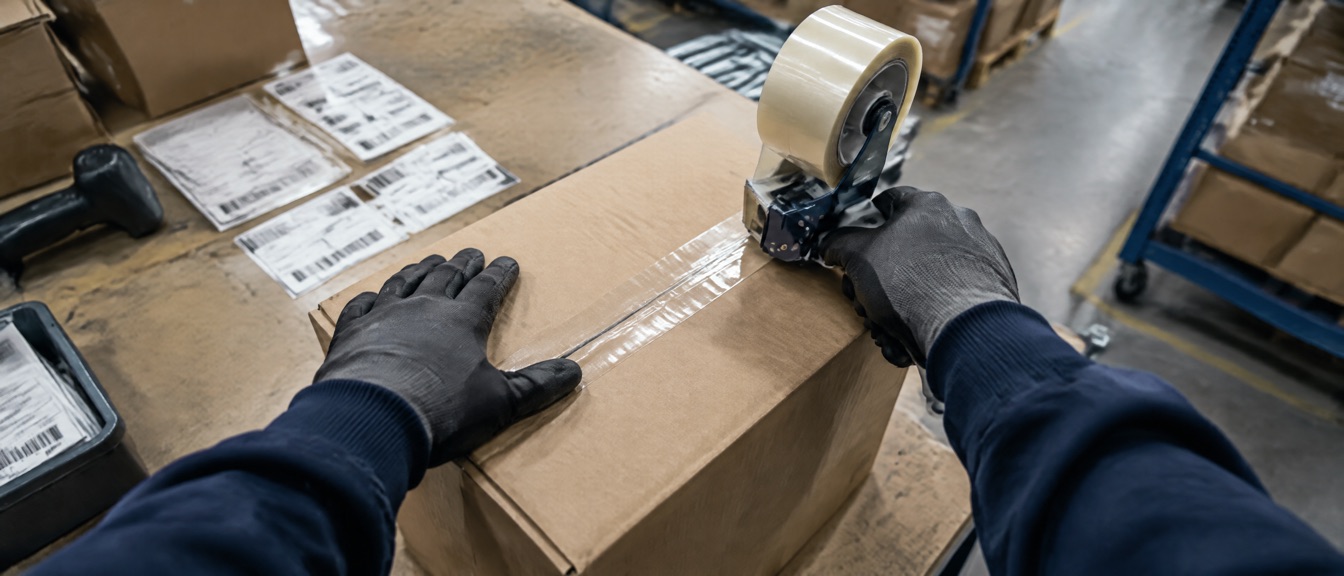
Yes. Amelia Robotics pays warehouses and distribution businesses for approved recordings of order picking, packing and labeling, receiving, truck loading, palletizing and inventory counts. Typical pay is $500 to $2,000 a month per recording employee at 12.5 to 50 approved hours a week, and earnings vary. The business is paid monthly and sets the shares.
- Amelia lists three warehouse examples, and warehouses are one of the settings robot data buyers name most often.
- Large teams on steady shifts can make warehouses one of the bigger earners, illustratively.
- Keep forklift driving out unless agreed, and check client contracts before filming their products.
Can a warehouse get paid to record its workers?
Yes. Through Amelia Robotics, pickers, packers and dock workers record their normal work on a head-mounted phone with hands in frame. Amelia pays the warehouse once a month for approved recordings. Typical pay is $500 to $2,000 a month per recording employee, assuming 12.5 to 50 approved hours a week over four weeks. Earnings vary; your agreement and approved recordings decide pay.
Warehouses are a natural fit: the work is hands-on, repeatable and done on steady shifts. More on the program at the physical AI hub.
Source: Amelia Robotics: business program (checked Nov 2026)
Which warehouse tasks count?
Amelia publishes three examples for warehouses and distribution:
- Order picking, packing and labeling: each picks, case picks, boxing, dunnage and label application.
- Receiving, truck loading and palletizing: unloading, checking in, building and wrapping pallets.
- Inventory counts: cycle counts and bin checks.
Source: Amelia Robotics: business program (checked Nov 2026)
What could your crew earn?
Move the sliders to match your crew.
- Per worker
- $500
- You keep
- $10,000
- Per year
- $240,000
Illustrative, at about $10 per approved hour. Typical pay is $500 to $2,000 a month per recording employee; earnings vary and your agreement decides actual pay.
How much could a warehouse earn from recordings?
Illustrative maths at the typical rate of $10 per approved hour: people x approved hours a week x 4. Pickers and packers spend most of a shift with their hands busy, so higher hour bands are realistic if the recording does not slow pick rates.
Amelia's split example is 50% worker, 10% lead, 40% business. Many warehouses run shift leads already, so the lead share maps neatly onto existing roles. You can set different splits for each team, such as day and night shift.
| Example crew | People recording | Approved hours a week each | Illustrative monthly payment | Business keeps (40% example) |
|---|---|---|---|---|
| Small 3PL or e-commerce warehouse | 6 | 20 | $4,800 | $1,920 |
| Regional distribution center shift | 20 | 30 | $24,000 | $9,600 |
| Multi-shift operation | 50 | 35 | $70,000 | $28,000 |
What about forklift safety, client products and worker consent?
OSHA requires employers to make sure every forklift operator is trained and competent to drive safely (29 CFR 1910.178). A camera adds nothing to that and should take nothing away: a mount must not block vision or distract, and driving should stay out of scope unless Amelia asks for it and you are satisfied it is safe.
If you are a 3PL, your clients' products, labels and order data appear in every frame. Check your client contracts for confidentiality terms and agree on the setup call how labels, addresses and order details are handled. For staff, get written agreement from everyone who records. Some states also set rules for watching staff electronically. Connecticut, for example, requires prior written notice to employees and counts cameras as electronic monitoring (Conn. Gen. Stat. sec. 31-48d). About 11 states, including California, Florida, Illinois, Pennsylvania and Washington, require everyone in a conversation to agree before it is recorded (Reporters Committee for Freedom of the Press).
- Exclude shipping labels with customer addresses where you can, or agree how they are handled.
- Keep pedestrian walkways and dock edges clear of anyone looking down at a phone.
- Leave out high-security or regulated product areas.
Why do robotics companies want warehouse footage?
Warehouses are where many robots are headed first. Micro1's head of robotics data named factory warehouses and retail among the places this data is needed, telling CNN the movements are all different in each (CNN). Instawork built its wearable camera system for kitchens, warehouses, hotels and light manufacturing (Instawork).
Picking mixed items is still hard for robots: soft bags, odd shapes and crowded bins. Footage of skilled people doing it fast is what helps. For what is already deployed, see warehouse robots.
Source: CNN via Scripps News: How filming your chores could train the android butlers of the future
How does a warehouse get started?
Apply with four questions, agree tasks and recording requirements on a setup call, get activated and invite your teams. Have ready:
- Headcount by shift and role, and hands-on hours per person per week.
- Which zones are in scope and which are excluded.
- Phones and head mounts. Amelia's setup guidance says the business buys one mount per person.
- Client contract checks and a split plan by shift.
Next step
Read about how warehouse robots work today or estimate a shift's earnings on the physical AI hub.
Common questions
Do robotics companies pay warehouses for picking and packing video?
Amelia Robotics does. It lists order picking, packing and labeling as an example, typically paying $500 to $2,000 a month per recording employee; earnings vary.
Is it legal to record warehouse workers?
Usually with notice and their agreement, but state rules vary. Connecticut requires prior written notice of electronic monitoring. Ask your lawyer.
Can forklift drivers record?
Keep forklift driving out unless it is agreed and safe. OSHA requires every operator to be trained and competent, and a camera must never block vision or distract.
Do my workers have to agree?
Yes. Get written agreement, and workers start each recording themselves.
How much can a 20-person warehouse shift earn?
At the typical rate of $10 per approved hour, 20 people at 25 approved hours a week is $20,000 a month. Illustrative only.
Will this footage help robots replace warehouse jobs?
It is meant to teach robots handling tasks, so be honest with your team. Robots are still being trained on exactly this kind of work, which is why the footage is wanted, and nobody can promise how fast that changes.
Sources and further reading
- Amelia Robotics: business program (checked Nov 2026)
- Amelia Robotics: for robotics labs
- 29 CFR 1910.178: Powered industrial trucks (OSHA)
- Connecticut General Statutes, chapter 557 (sec. 31-48d, electronic monitoring of employees)
- Reporters Committee for Freedom of the Press: Reporter's Recording Guide
- CNN via Scripps News: How filming your chores could train the android butlers of the future
- Instawork: Instawork Robotics Lab debuts Instacore (press release)
Origin Data Partners is independent. We may be paid by our partner when a business we introduce is paid; it never comes out of your earnings. How Origin is paid.