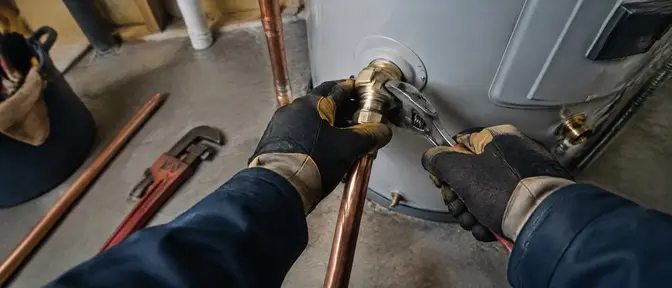
Most HVAC companies add revenue the same few ways: maintenance agreements, indoor air quality work, financing, water heaters and light commercial contracts. Those are still the big ones. A newer option costs no trucks and no marketing: a few programs pay a business for first-person video of its techs doing normal jobs, for training AI and robots. Public pages read on 15 November 2026 state $12 to $18 per approved hour at one program and a flat $35 per recorded hour at another. It is a supplement, small next to a maintenance base, and it needs each tech and each customer to agree.
- Maintenance agreements remain the revenue that evens out the shoulder months. Start there if you have none.
- The federal home energy credit that helped sell heat pumps ended for work done after 2025. Check what your state and utility still offer before you quote it.
- Paid recording is real but small. Count on it as extra margin on hours you already sell, not as a new business line.
What are the usual new revenue streams for an HVAC company?
Maintenance agreements, indoor air quality products, customer financing, water heating and commercial service contracts. Each sells more to customers you already have, which is cheaper than finding new ones.
Maintenance agreements come first because they fill the calendar when the phones are quiet. ENERGY STAR tells homeowners that "Contractors get busy once summer and winter come, so it's best to check the cooling system in the spring and the heating system in the fall." That is your shoulder season, sold in advance.
Indoor air quality is the other common add-on. The EPA says "Americans, on average, spend approximately 90 percent of their time indoors", which is the case you make for filtration, humidity control and ventilation on a call you are already on. The table lists the usual options and the catch with each.
| Revenue stream | What it takes | The catch |
|---|---|---|
| Maintenance plans | A priced plan, a renewal process and techs who offer it on every call | Thin margin on the visit itself; the value is retention and replacement leads |
| Indoor air quality | Training, a short product list and a way to measure before you sell | Easy to oversell. Sell what a reading supports |
| Customer financing | A lender programme and office time for paperwork | Dealer fees come out of your margin |
| Water heaters and heat pump water heaters | Plumbing licence where the state requires one | Emergency replacements disrupt the schedule |
| Light commercial contracts | Insurance limits, after-hours cover and refrigeration skills | Slower payment terms |
| Duct sealing and home performance | Test equipment and trained installers | Depends on local rebates |
| Paid recording of real jobs | Techs who opt in, customers who agree, a program that accepts your work | Small sums; only approved hours count |
What changed for HVAC revenue in 2026?
Two federal changes. The home energy credit that helped close heat pump sales has run out, and new equipment now ships with different refrigerants.
The IRS says of the energy efficient home improvement credit: "You can claim the credit for improvements made through December 31, 2025." A quote written in 2026 should not promise it. State and utility rebates are separate and vary, so check each one before it goes on a proposal.
On refrigerants, the EPA says "Beginning January 1, 2025, certain technologies may no longer use high global warming potential (GWP) hydrofluorocarbons (HFCs) or HFC blends." Residential and light commercial air conditioning and heat pumps are on its list. Anyone who opens a refrigerant circuit still needs certification: EPA rules "require that technicians who maintain, service, repair, or dispose of equipment that could release refrigerants into the atmosphere must be certified" (EPA Section 608). Training techs on the newer refrigerants is a cost before it is revenue.
Do companies pay to record HVAC work?
Yes, a few do, and they pay the business, not the tech. One business recording program's public list of eligible work, read on 15 November 2026, names "HVAC installation & service" under plumbing, HVAC and electrical.
AI and robotics companies need video of skilled manual work, seen from where the worker stands. It cannot be staged in a studio, because the value is in real equipment in real houses. A founder told MIT Technology Review that "you need to give lots and lots of variations for the robot to generalize well". A tech who swaps a capacitor in an attic in the morning and brazes a line set in a basement in the afternoon produces exactly that variety.
It is early, and programs open and close. Plumbing, HVAC and electrical covers what counts in the trade and what is never recorded.
What does a crew do, and does it slow the tech down?
A tech who has opted in wears a phone on a head mount, or a small camera kit, and starts a recording at the beginning of an agreed task. The job is done the normal way. It should add a minute or two per task, not change the work.
Not every hour on the clock counts. One program's public page, read on 15 November 2026, describes an approved hour as "Footage that's clearly usable: well lit, with hands visible in frame, showing the task being performed." Attics, crawlspaces and mechanical rooms are dark and tight, so expect fewer approved hours than a shop or a kitchen would give. Driving, paperwork and time on the phone do not count at all.
Nobody directs the tech and nothing is acted out. If a recording gets in the way of a job, the tech stops it. Safety and the customer come before the footage.
What is the owner paid, and what are techs paid?
The business is paid for the hours a program accepts, and the owner decides what to share with the techs who record. In the business programs described here, the program pays the business, not the tech.
Three business recording programs state figures on their own public pages, read on 15 November 2026. One pays $12 to $18 per approved hour, depending on the kind of work. One pays a flat $35 for every recorded hour in a booked session. One gives its own estimate of $500 to $2,000 a month per recording employee, assuming 12.5 to 50 approved hours a week. These are the programs' statements, not a promise of pay: the agreement you sign and the hours a program accepts decide what arrives.
A worked example, not a forecast. Four techs record 10 approved hours a week each. At $12 to $18 per approved hour, that is $480 to $720 a week to the business. One program's public page shows a sample split of 50% to the worker, 10% to a team lead and 40% to the business. On that split a tech's share of their own 10 hours is $60 to $90 a week. Your rate, your split and your approved hours will differ.
Keep it in proportion. That is real margin on hours already sold, and extra pay that helps keep good techs, but it is small next to a maintenance-agreement base or one more replacement a month. HVAC profit margins and what HVAC owners earn give the wider numbers. The business programs compared and the pay rates tracker set the figures side by side.
What could your crew earn?
Move the sliders to match your crew.
- Per worker
- $200
- You keep
- $800
- Per year
- $19,200
Illustrative, at about $10 per approved hour, the rate implied by one program’s example. Per worker and per year are estimates on the same basis. One program’s published estimate is $500 to $2,000 a month per recording employee; earnings vary and your agreement decides actual pay.
Do customers have to agree before a tech records in their home?
Yes. Ask before the job, in writing, and take no for an answer. It is their home in the background, and the footage is licensed to other companies.
Programs expect it. One program's public page, read on 15 November 2026, says "Professional trades and construction can include residential job sites" and tells businesses to "Agree tasks and permissions before recording." Point the camera at the equipment. Keep faces, family photos, post, paperwork and screens out of frame.
Sound is the legal risk. Federal law allows a conversation to be recorded where "one of the parties to the communication has given prior consent to such interception" (18 U.S.C. 2511), but California penalises recording a confidential conversation "without the consent of all parties to a confidential communication" (Penal Code 632), and other states have similar rules. Record without sound if the program allows it. Recording employees at work has the state rules. This is a summary of what the rules say, not legal advice. Check your own state and contracts, and ask a lawyer where the stakes are high.
Who owns the video?
The agreement decides, so read it before anyone records. Most arrangements are a licence: the business grants the program rights to use the footage, and what the business keeps depends on the wording.
- Is the licence exclusive, or can you use and license the footage elsewhere?
- Can you ask for a clip to be deleted after upload, and how fast?
- Who is responsible if a customer or a tech complains later?
- How are approved hours counted, and can you see the count before you are paid?
- What happens to the footage if you leave the program?
Your service records can be licensed too
Video is one thing AI companies pay a contractor for. The other is the written record of the work: service histories by equipment model, diagnostic notes, load calculations, estimates set against actual costs, warranty claims. Those are licensed, not recorded, and the company keeps the originals. If your company has several years of them in a field service system, see what your company records are worth.
Next step
If your techs do installs and service calls, check whether your business qualifies. It takes about a minute and shows an estimate for your crew.
Common questions
How can an HVAC company add revenue without more trucks?
Sell more to the customers you already serve: maintenance agreements, indoor air quality work, financing and water heating. Paid recording of normal jobs is a newer option that needs no trucks at all, but it is small money and depends on a program accepting your work.
What are new revenue streams for HVAC contractors in 2026?
The established ones are maintenance plans, indoor air quality, financing, water heaters and light commercial contracts. The new one is paid recording: public pages read on 15 November 2026 state $12 to $18 per approved hour at one program and a flat $35 per recorded hour at another. None is a promise of pay.
Is there a side hustle for HVAC technicians that uses the job itself?
Recording the work is one, but it runs through the employer. Programs sign and pay the business, and the owner sets the tech's share. A tech cannot join alone or record a customer's job without the company and the customer agreeing.
Does recording HVAC jobs slow a technician down?
It should not. The tech starts a recording at the beginning of an agreed task and works normally. Expect a minute or two of set-up per task, and expect dark attics and crawlspaces to produce fewer approved hours than open, well-lit work.
Who owns the video when an HVAC company records its jobs?
The agreement with the program decides. It is usually a licence from the business. Check whether it is exclusive, whether you can have a clip deleted, and what happens to the footage if you leave.
Can an HVAC business still sell heat pumps on the federal tax credit?
Not for work done in 2026. The IRS says the energy efficient home improvement credit can be claimed for improvements made through December 31, 2025. State and utility rebates are separate, so check each one before you quote it.
Sources and further reading
- ENERGY STAR: heating and cooling maintenance checklist
- EPA Report on the Environment: indoor air quality
- IRS: energy efficient home improvement credit
- EPA: technology transitions, HFC restrictions by sector
- EPA: Section 608 technician certification requirements
- MIT Technology Review: the gig economy training humanoid robots (Apr 2026)
- 18 U.S.C. 2511 (govinfo)
- California Penal Code 632
Origin Data Partners is independent and does not represent Amelia Robotics. Origin may earn a reward from Amelia Robotics if a business it introduced joins and gets paid; Amelia pays that reward itself. Origin charges your business nothing. How Origin is paid.