Factories are the most automated workplaces: the IFR counts a record 5 million industrial robots operating worldwide in 2025, and US installations grew 12% to almost 38,500, making the US the second largest market. North American companies ordered 36,766 robots worth $2.25 billion in 2025. Humanoids are still pilots: Figure's robots loaded over 90,000 parts at BMW Spartanburg before being retired.
- Fixed robot arms for welding, painting and machine tending are mature and still growing, now led by food and other non-automotive plants.
- Humanoid robots have completed real factory pilots, but the IFR says safety, cost and the business case still limit them.
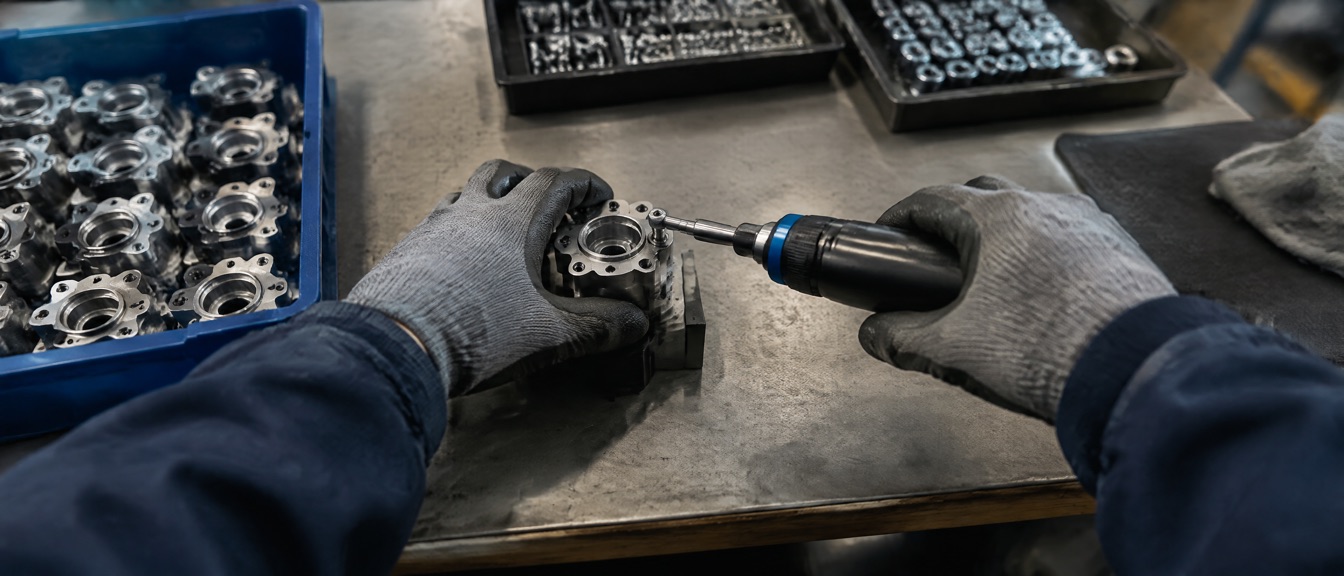
- Small shops are where hand skills still dominate: short runs, changeovers, fitting and finishing. That is the footage robot labs lack.
What are robots doing in manufacturing in 2026?
Most factory robots are arms bolted to the floor inside a cell: welding car bodies, painting, palletizing, loading machines. That work is decades old and keeps growing. The IFR says the global operational stock of industrial robots rose 9% to a record 5 million in 2025, and it forecasts 655,000 new installations worldwide in 2026.
The newer story is robots that work in spaces built for people. In a BMW trial at Spartanburg, South Carolina, Figure's humanoid inserted sheet metal parts into fixtures. Figure later said its robots ran 10-hour weekday shifts for 1,250 hours of runtime, loading more than 90,000 parts that went into over 30,000 BMW X3s.
| Company or type | Robot and task | Status | Source |
|---|---|---|---|
| Industrial arms (many makers) | Welding, painting, handling and machine tending in auto, electronics, food | Deployed at scale | IFR |
| Figure with BMW | Figure 02 humanoid loading sheet metal into weld fixtures | Pilot completed | Repairer Driven News |
| Food and consumer goods plants | Packing, picking and palletizing | Deployed, fast-growing segment | A3 |
| Humanoids generally | Mixed handling in human workspaces | About 7,000 sold worldwide in 2025; mostly specialized | IFR |
How much do manufacturing robots cost, and how are they sold?
Prices vary so widely by payload, reach and the cell around the robot that a single number misleads. Budget for the whole cell, including safety guarding, grippers, programming and integration, not just the arm. The IFR notes that easier programming and system integration are reducing deployment costs, which is what is opening automation to smaller plants.
More robots are now offered as a service, especially mobile and food-line robots, which turns a large purchase into a monthly fee. Before buying, cost out the changeover time on your real product mix, not the vendor's demo part.
How many robots are in US manufacturing?
The IFR says US installations grew 12% to almost 38,500 units in 2025, the third highest number on record, and that the US passed Japan to become the second largest robot market after China. In its preliminary June 2026 figures, the IFR credited the recovery to growth in the food industry and other non-manufacturing sectors.
Orders tell the same story. A3 reports North American companies ordered 36,766 robots valued at $2.25 billion in 2025, up 6.6% in units, with food and consumer goods, semiconductors and life sciences contributing to the growth.
What can manufacturing robots still not do?
Robots excel at the same motion repeated thousands of times. They still struggle with short runs, frequent changeovers, flexible parts like hoses and wiring harnesses, final fitting, deburring by feel, and inspection that relies on judgment. Many small and mid-size shops live on exactly that work.
For humanoids, the IFR lists safety standards, high training and maintenance costs and the lack of a strong business case as the main limits, and says most current uses remain specialized and often require human teleoperation.
Will robots replace manufacturing workers?
Robots have been replacing specific factory tasks for decades while plants still struggle to hire. The BLS projects employment of assemblers and fabricators to grow 1 percent from 2025 to 2035, with about 177,500 openings a year from people retiring or moving on. The workers in most demand are the ones who can set up, run and fix automated equipment.
For a shop owner, the honest outlook is that automation takes the most repetitive stations first, while skilled fitters, machinists and welders stay hard to find. See the skilled trades shortage page for hiring and retention data.
Why robot makers need footage of your crew
Labs building general-purpose robots need examples of skilled hands doing varied work, not the same weld a million times. Figure has shown a humanoid learning from 100% egocentric human video with no robot demonstrations. The explainer on how robots learn from video covers what makes footage useful.
Amelia Robotics pays businesses for approved recordings of work their crews already do. A phone is mounted so it films the task from the worker's view with the hands in frame, and each worker starts a recording deliberately. Tasks, permitted areas and participants are agreed on a setup call before anyone records, and you can leave out jobs or areas. Payment goes to the business once a month with a statement, and you decide how much to share with the crew.
Illustrative example: a fabrication shop with 8 people who each record 20 approved hours a week would earn about $6,400 a month at the typical rate (8 x 20 x 4 x $10). Amelia's typical pay is $500 to $2,000 a month per recording employee, assuming 12.5 to 50 approved hours a week. Earnings vary, and your agreement and approved recordings decide actual pay. See what counts on our manufacturing businesses page.
Next step
See how manufacturers get paid for recording work and run your own numbers in the calculator.
Common questions
How many robots are used in manufacturing?
The IFR counts a record 5 million industrial robots operating worldwide in 2025. US installations grew 12% to almost 38,500 that year.
How much does a manufacturing robot cost?
It depends on the task, and the arm is only part of the bill once grippers, guarding, programming and integration are added. The IFR says easier programming and integration are bringing deployment costs down.
Are humanoid robots working in factories?
In pilots. Figure's robots loaded over 90,000 parts at BMW Spartanburg over 1,250 hours of runtime, but the IFR says humanoid uses remain specialized and often need teleoperation.
Will robots replace factory workers?
They replace specific repetitive tasks. BLS still projects about 177,500 openings a year for assemblers and fabricators through 2035.
What manufacturing tasks are hard for robots?
Short runs, frequent changeovers, flexible parts, final fitting, finishing by feel and judgment-based inspection.
Can a manufacturer get paid to record its workers?
Yes. Amelia Robotics pays businesses for approved first-person recordings of work crews already do. Its example is $500 to $2,000 a month per recording employee; earnings vary.
Sources and further reading
- IFR: World Robotics 2026 industrial robots (Sep 2026)
- IFR: US robot installations, preliminary 2025 (Jun 2026)
- A3: North American robot orders 2025 (Feb 2026)
- BMW Group: humanoid robot test at Plant Spartanburg
- Repairer Driven News: Figure robots complete BMW project (Nov 2025)
- IFR: World Robotics 2026 service robots (Sep 2026)
- BLS Occupational Outlook: assemblers and fabricators
- Figure: Project Go-Big, training on human video
- Amelia Robotics: business program (checked Nov 2026)
- Amelia Robotics: for robotics labs
Origin Data Partners is independent. We may be paid by our partner when a business we introduce is paid; it never comes out of your earnings. How Origin is paid.