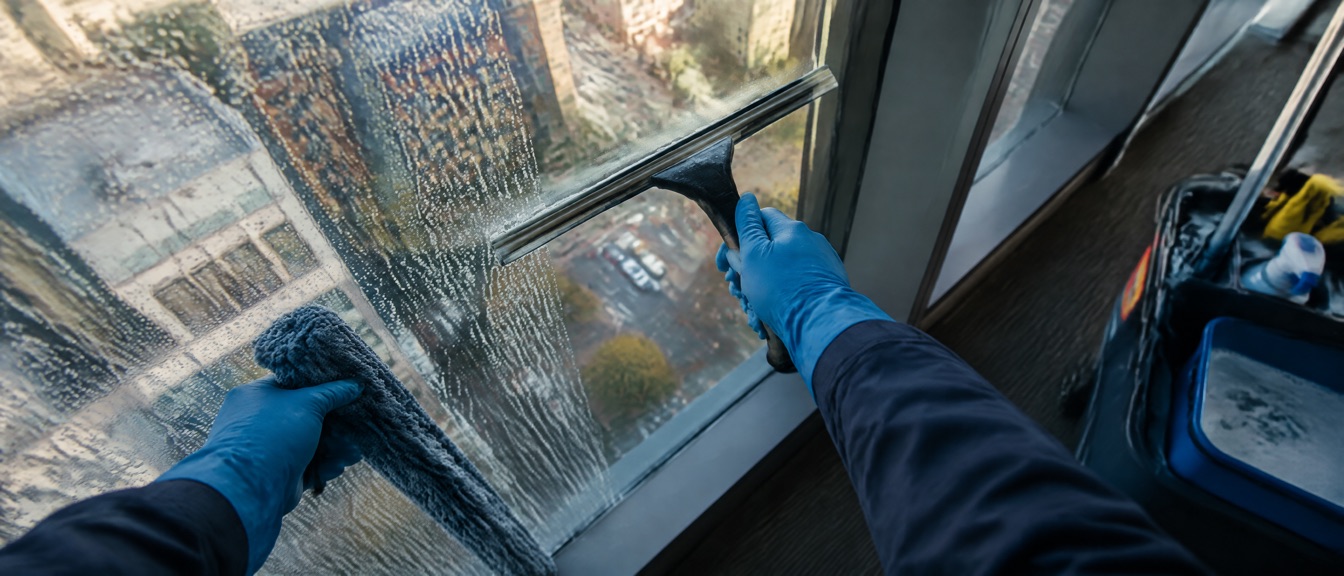
Yes. Amelia Robotics pays commercial cleaning businesses for approved recordings of restroom, floor and window cleaning, carpet cleaning and industrial laundry. Typical pay is $500 to $2,000 a month per recording employee at 12.5 to 50 approved hours a week, and earnings vary. The company is paid monthly and sets each cleaner's share.
- Amelia lists two cleaning examples covering restrooms, floors, windows, carpets and laundry.
- You clean other people's buildings, so client permission is the first step.
- Restrooms are recorded only when closed and empty. No exceptions.
Can my cleaning company get paid to record our crews?
Yes. With Amelia Robotics, cleaners record work they already do on a head-mounted phone, hands in frame. Amelia pays the company once a month for approved recordings. Typical pay is $500 to $2,000 a month per recording employee, assuming 12.5 to 50 approved hours a week over four weeks. Earnings vary, and your agreement sets actual pay.
Cleaning is almost all hands-on time, which helps approved hours. See the physical AI hub for how the program works.
Source: Amelia Robotics: business program (checked Nov 2026)
Which cleaning tasks count?
Amelia lists two examples for commercial cleaning and janitorial work:
- Commercial restroom, floor and window cleaning: fixtures, partitions, mopping, scrubbing, glass.
- Carpet cleaning and industrial laundry: extraction, spotting, sorting, washing and folding.
Source: Amelia Robotics: business program (checked Nov 2026)
What could your crew earn?
Move the sliders to match your crew.
- Per worker
- $400
- You keep
- $4,800
- Per year
- $115,200
Illustrative, at about $10 per approved hour. Typical pay is $500 to $2,000 a month per recording employee; earnings vary and your agreement decides actual pay.
How much could a cleaning company earn from recordings?
Illustrative maths at the typical rate of $10 per approved hour: people x approved hours a week x 4. Night crews on part-time routes may log 15 to 25 hands-on hours a week; day porters and laundry staff can log more.
Amelia's split example is 50% worker, 10% lead and 40% business. Cleaning wages are tight, so a clear worker share can help with retention. You can set different splits per route or team.
| Example crew | People recording | Approved hours a week each | Illustrative monthly payment | Business keeps (40% example) |
|---|---|---|---|---|
| Small office-cleaning route | 5 | 15 | $3,000 | $1,200 |
| Regional janitorial company | 15 | 20 | $12,000 | $4,800 |
| Large contract cleaner or laundry | 40 | 25 | $40,000 | $16,000 |
What should you agree with clients before recording?
You work in your clients' buildings, so read your contracts for confidentiality and photography terms and ask each client before recording. Offices hold papers, screens and badges; medical and legal sites hold regulated information. Agree with the client which areas are in scope, and leave out anything sensitive.
For your own team, get written agreement from everyone who records. Some states also set rules for watching staff electronically. Connecticut, for example, requires prior written notice to employees and counts cameras as electronic monitoring (Conn. Gen. Stat. sec. 31-48d). About 11 states, including California, Florida, Illinois, Pennsylvania and Washington, require everyone in a conversation to agree before it is recorded (Reporters Committee for Freedom of the Press).
- Restrooms: record only when the room is closed, empty and signed as closed for cleaning. Stop if anyone enters.
- Keep screens, documents, whiteboards and badges out of frame.
- Exclude healthcare, legal, financial and secure government areas unless the client agrees in writing.
- Keep the mount clear of chemical splash and any eye protection.
Source: Connecticut General Statutes, chapter 557 (sec. 31-48d, electronic monitoring of employees)
Why do robotics companies want cleaning footage?
Cleaning is one of the first jobs people want robots to do, and one of the hardest: every surface, fixture and mess is different. CNN reports that data companies give contributors head cameras and task lists that include cleaning (CNN). DoorDash pays couriers to film everyday tasks for robotics training, according to TechCrunch (TechCrunch).
Commercial cleaning adds what home videos lack: professional equipment, commercial fixtures and repeatable routines. Hotels and venues face the same questions; see hotels and event venues.
Source: CNN via Scripps News: How filming your chores could train the android butlers of the future
How does a cleaning company get started?
Apply with four questions, agree tasks and requirements on a setup call, get activated and invite your crews. Prepare:
- Headcount by route or site, and hands-on hours per week.
- Which clients have agreed and which areas are in scope.
- Phones and head mounts. Amelia's setup guidance says the business buys one mount per person.
- A split plan per route or team.
Next step
See how hotel housekeeping teams approach this, or estimate your crews on the physical AI hub.
Common questions
Can a janitorial company get paid to record cleaning work?
Yes. Amelia lists commercial restroom, floor and window cleaning, plus carpet cleaning and industrial laundry. Typical pay is $500 to $2,000 a month per recording employee; earnings vary.
Do I need my clients' permission?
Yes, in practice. You are recording in their buildings, so check contracts and get their agreement on which areas are in scope.
Can we record restroom cleaning?
Only when the restroom is closed, empty and signed as closed for cleaning. Stop recording if anyone enters.
Do my cleaners have to agree?
Yes. Get written agreement; workers start each recording themselves.
How much can a 10-person cleaning crew earn?
At the typical rate of $10 per approved hour, 10 people at 20 approved hours a week is $8,000 a month. Illustrative only.
Will cleaning robots trained on this replace my staff?
The footage helps robots learn cleaning tasks, so be honest about that. Nobody can promise how fast that changes, so share the payments fairly with the people recording.
Sources and further reading
- Amelia Robotics: business program (checked Nov 2026)
- Amelia Robotics: for robotics labs
- Connecticut General Statutes, chapter 557 (sec. 31-48d, electronic monitoring of employees)
- Reporters Committee for Freedom of the Press: Reporter's Recording Guide
- CNN via Scripps News: How filming your chores could train the android butlers of the future
- TechCrunch: DoorDash launches a Tasks app that pays couriers to submit videos to train AI (March 2026)
Origin Data Partners is independent. We may be paid by our partner when a business we introduce is paid; it never comes out of your earnings. How Origin is paid.