The average grocery store profit margin is about 1% to 3% of sales. FMI, The Food Industry Association, puts the average net profit for food retailers at 2.1% in 2025, up from 1.6% in 2023. Independent grocers do slightly worse: the 2025 NGA and FMS Solutions study found net profit of 1.9%, with single-store grocers earning EBITDA of just 1.52% against 3.28% for multi-store operators.
- Food retailers averaged 2.1% net profit in 2025 (FMI); the 2023 figure was 1.6% and 2019 about 1%.
- Independent grocers reached 1.9% net in fiscal 2024; scale matters, with single-store EBITDA at 1.52% versus 3.28% for multi-store.
- Thin margins mean every dollar of extra profit is worth about 50 dollars of extra sales.
What is the average grocery store profit margin?
FMI, the main US food retail trade association, reports that the average net profit for food retailers was 2.1% in 2025, from its annual survey The Food Retailing Industry Speaks. FMI describes the sector as operating on historically narrow margins. US supermarket sales totaled about $1 trillion in 2025.
The figure moves with the economy. Grocery Dive reported FMI's 2023 figure of 1.6% the lowest since about 1% in 2019.
Grocery store profit margins by store type
Scale changes the picture. The table combines FMI and the independent grocer study:
| Group | Measure | Margin | Source |
|---|---|---|---|
| All food retailers (FMI survey) | Net profit, 2025 | 2.1% | FMI |
| All food retailers (FMI survey) | Net profit, 2023 | 1.6% | FMI via Grocery Dive |
| Independent grocers | Net profit, fiscal 2024 | 1.9% | NGA and FMS Solutions |
| Single-store independents | EBITDA, fiscal 2024 | 1.52% | NGA and FMS Solutions |
| Multi-store independents | EBITDA, fiscal 2024 | 3.28% | NGA and FMS Solutions |
Source: FMS Solutions and NGA: 2025 Independent Grocers Financial Report (June 2025)
What could your crew earn?
Move the sliders to match your crew.
- Per worker
- $500
- You keep
- $4,000
- Per year
- $96,000
Illustrative, at about $10 per approved hour. Typical pay is $500 to $2,000 a month per recording employee; earnings vary and your agreement decides actual pay.
Why are grocery margins so thin?
Groceries are bought often and compared on price, so stores compete hard on everyday items. Labor, rent, refrigeration, card fees and shrink (theft, spoilage and damage) come out of a gross margin that is already modest. Perishables carry better markups but also the most waste.
The 2025 independent grocers report said net profit edged up to 1.9%, led by larger operators, while single-store grocers saw EBITDA fall. Bigger operators spread fixed costs over more sales and buy on better terms.
How much does a grocery store owner make?
Multiply sales by margin. A single independent store with $5 million in annual sales at 1.9% net makes about $95,000 before tax, and owners who work in the store usually also draw a wage already counted in costs. At $2 million in sales, the same margin is about $38,000. For comparison, general and operations managers across all industries earned a median of $105,770 in May 2025, according to the BLS.
Owners structured as S corporations must take reasonable W-2 wages before distributions, per the IRS; sole proprietors pay self-employment tax on profit.
How can a grocery store improve its margin?
On a 2% base, small changes matter:
- Cut shrink with better ordering, rotation and loss prevention.
- Grow fresh, prepared foods and private label, which carry better margins.
- Review card fees, energy contracts and refrigeration maintenance.
- Use scheduling tools to match staff to traffic.
- Add revenue that does not depend on more baskets (below).
A new revenue line that uses work your crew already does
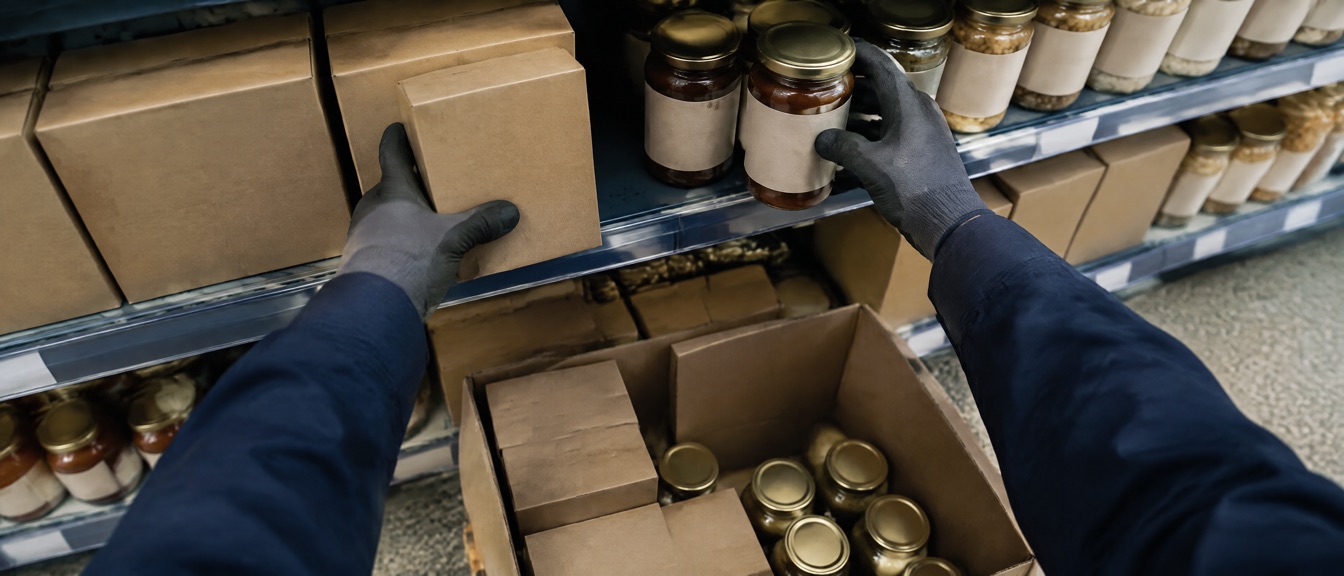
Amelia Robotics lists retail and grocery among its priorities. It pays businesses for approved first-person recordings of routine store work, such as stocking shelves, facing products, deli prep and receiving. Amelia's typical pay is $500 to $2,000 a month per recording employee, assuming 12.5 to 50 approved hours a week; earnings vary, and your agreement and the approved recordings decide what is actually paid.
Illustrative example for four staff recording part of their shifts: 4 staff x 12.5 approved hours a week x 4 weeks x $10 = $2,000 a month, or $24,000 a year, at the typical rate. Amelia pays the business once a month with a statement, and you decide how much to share with the people who record.
At a 1.9% net margin, $24,000 a year is the profit on roughly $1,260,000 of grocery sales. Shoppers can be kept out by agreeing recording areas and times, such as back rooms or before opening. See how this works for retail and grocery and how stocking robots learn.
Next step
Estimate your store's figure on the Physical AI hub.
Common questions
What is the average profit margin of a grocery store?
About 1% to 3% of sales. FMI reports 2.1% net profit for food retailers in 2025, and independent grocers reported 1.9% for fiscal 2024.
Why do grocery stores have such low profit margins?
Shoppers compare prices on everyday items, and labor, rent, refrigeration, card fees and spoilage absorb most of the gross margin.
How much does a grocery store owner make?
Sales times margin: about $95,000 pre-tax for a $5 million store at 1.9%, or $38,000 at $2 million, plus any wage the owner draws.
Do independent grocery stores make less than chains?
Generally yes. In the 2025 independent grocers report, single-store EBITDA was 1.52% against 3.28% for multi-store operators.
Is a grocery store a profitable business?
It can be steady, but margins are thin. FMI's 2.1% average for 2025 means a store keeps about 2 cents of every dollar.
Sources and further reading
- FMI, The Food Industry Association: Food industry facts (2025 data)
- FMI: The Food Retailing Industry Speaks
- Grocery Dive: Grocery industry profit margins fall to pre-pandemic levels (July 2024)
- FMS Solutions and NGA: 2025 Independent Grocers Financial Report (June 2025)
- BLS Occupational Outlook Handbook: Top executives (May 2025 wages)
- IRS: S corporation compensation and medical insurance issues (checked Nov 2026)
- Amelia Robotics: business program (checked Nov 2026)
- Amelia Robotics: for robotics labs
Origin Data Partners is independent. We may be paid by our partner when a business we introduce is paid; it never comes out of your earnings. How Origin is paid.