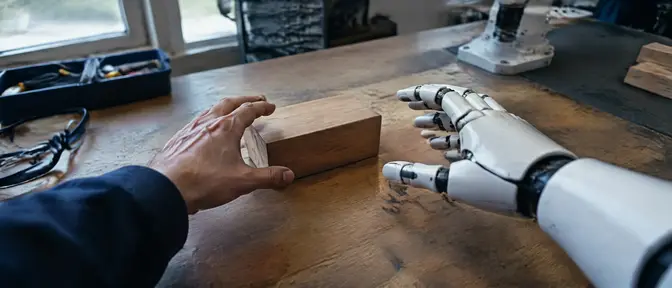
Yes, some programs pay for voice recordings. ElevenLabs pays creators when paid users use their shared voice clone, CrowdGen by Appen pays per completed recording unit on some projects, Babel Audio pays per audio hour for conversations, and Uber has piloted voice tasks for drivers. Pay varies widely, and a licence can let a buyer clone your voice.
- Pay models differ: a royalty on use of a voice clone (ElevenLabs), a fee per completed recording unit (CrowdGen by Appen), a rate per audio hour (Babel Audio), or a fee per task (Uber pilot).
- Figures below are what each program or a named news report says. None is a promise of income.
- Read the licence: some terms are perpetual and sublicensable, and a voice clone can say things you never said.
- Everyone whose voice is on a recording may need to consent, and some US states require all parties to agree.
- A business that records staff needs their written agreement first, and Illinois treats a voiceprint as biometric data.
Can you get paid to record your voice for AI?
Yes. AI companies need recorded speech to train speech recognition, voice assistants and text-to-speech, and several programs pay individuals for it. They pay in very different ways, from a few cents per completed recording unit to a share of revenue each time a cloned voice is used.
What you are selling also differs. Reading sentences for a speech recognition dataset is not the same as licensing a clone of your voice that anyone on a platform can make say new things. Check which one a program wants before you record.
Which programs pay for voice recordings, and what do they say they pay?
Each figure is what the program publishes or what a named news report says it published, checked in November 2026. Rates change by project, language and country.
| Program | What you record | What it says about pay | Source |
|---|---|---|---|
| ElevenLabs Voice Library | About 2 hours of clean audio to build a Professional Voice Clone, then shared in its library | Paid on use by paid users only; default rate set by the notice period you choose; weekly payouts once you pass the threshold, usually $10; creators had earned over $22 million in total by May 2026 | ElevenLabs payouts |
| CrowdGen by Appen | Read sentences on your phone, per project and language | One posting (Mexican Spanish project; checked November 2026): record 400 sentences, paid $0.030 USD per completed unit | Appen job posting |
| Babel Audio | Recorded conversations | Paid per audio hour at a base rate that depends on the project, plus bonus pay for quests; paid weekly | Babel Audio |
| Uber digital tasks (US pilot) | Voice clips, such as speaking in your language or dialect, for drivers and couriers | Uber said pay is set per task by complexity and time; launch screenshots showing $0.50 and $1 tasks were not representative, it said | Axios, Oct 2025 |
| Neon (offline since September 2025) | Your own side of phone calls | Said it paid 30 cents a minute for calls to other users and up to $30 a day for other calls; went offline in September 2025 after a security flaw | TechCrunch, Sept 2025 |
How does each program work?
ElevenLabs: you upload a Professional Voice Clone, which needs its Creator plan or above, and set the use cases, price tier and a notice period of up to two years. ElevenLabs reviews the voice before it goes live, pays through Stripe Connect, and says more than 10,400 creators now earn on the Voice Library.
CrowdGen by Appen: you apply and must be accepted for a project before using its Appen Mobile app to record. Each account is limited to one person and one voice. Pay is set per project, and the example above shows how small per-unit rates can be.
Babel Audio: you record conversations that help train AI, and Babel's site says it collects, combines and anonymises them into datasets. Its terms give Babel a worldwide, non-exclusive, perpetual, sublicensable licence to what you submit.
Uber: in October 2025 Uber launched a US pilot letting drivers and couriers do short tasks in its driver app, including voice recordings. Uber says task availability depends on client needs.
What rights does a voice licence give away?
This section is general information, not legal advice. Read the actual terms, and ask a lawyer before signing anything that covers a clone of your voice.
Look for four things: whether the licence is exclusive, whether it is perpetual or can be withdrawn, whether the buyer can sublicense it to others, and whether it allows a synthetic copy of your voice. TechCrunch reported that one call-recording app took a worldwide, exclusive, irrevocable licence with the right to sublicense through multiple tiers. ElevenLabs, by contrast, lets creators choose use cases and a notice period.
Some laws now address voice cloning. Tennessee's ELVIS Act (2024) updated its personal rights law because the old one did not address AI cloning that enables impersonation. In California, Labor Code section 927 can make a term in a contract for personal or professional services unenforceable when it allows a digital replica of your voice in place of work you would otherwise have performed in person, lacks a reasonably specific description of the intended uses, and you were not represented by a lawyer, or by a labor union whose collective agreement expressly covers digital replicas.
Do other people on the recording have to consent?
Often, yes. Federal law allows recording when one party to the conversation consents, but some states require every party to agree. California, for example, bars recording a confidential communication without the consent of all parties. When a call crosses state lines, the Digital Media Law Project advises getting everyone's consent.
This matters for programs that pay for calls or conversations. A privacy lawyer told TechCrunch that under many state laws you need consent from both parties to record a conversation. Do not submit audio of anyone who has not agreed, including family members in the background.
How can a business record its staff lawfully?
Get each person's written agreement before recording, say what the audio is for and who may receive it, and let people decline without penalty. If any caller or customer is on the recording, follow the consent rules above for every state involved.
Voice can count as biometric data. Illinois' Biometric Information Privacy Act lists a voiceprint as a biometric identifier, requires written notice of the purpose and how long it will be kept plus a signed written release, and bars selling or profiting from a biometric identifier. Audio used to build a voiceprint may be covered, so take advice before collecting or licensing it. This is not legal advice.
A business that already holds call recordings can license them for speech AI; see our guide to selling call recordings for AI training. If your company keeps records worth licensing, see what your data is worth.
What are the red flags?
An up-front fee to join, buy equipment or unlock higher pay.
Pay claims with no rate per unit, hour or use, or with no way to see what you have earned.
Terms that take an exclusive, irrevocable or perpetual licence, or allow a clone of your voice, without saying so plainly or paying for it.
Requests for recordings of other people, phone calls or private conversations without their consent.
No named company, address or support contact, or no clear way to delete your data.
Weak security for sensitive audio. TechCrunch reported in 2025 that a call-recording app went offline after a flaw let anyone access other users' phone numbers, recordings and transcripts.
Next step
For other ways to get paid for recordings, see apps that pay you to record chores and the pay rates tracker. If you run a crew-based business, see how businesses get paid for recording work.
Common questions
Can you get paid to record your voice for AI?
Yes. ElevenLabs pays creators when paid users use their shared voice clone, CrowdGen by Appen pays per completed recording unit on some projects, Babel Audio pays per audio hour for conversations, and Uber has piloted voice tasks for US drivers and couriers. Pay varies by program and project.
How much do AI voice recording jobs pay?
It depends on the model. One CrowdGen by Appen posting (Mexican Spanish project; checked November 2026) lists $0.030 USD per completed unit. Babel Audio pays a project base rate per audio hour. ElevenLabs pays per use of your voice clone and says creators earned over $22 million in total by May 2026.
Can I sell my voice to AI?
Yes, by licensing a voice clone on a marketplace such as the ElevenLabs Voice Library, where you choose use cases, a price tier and a notice period. Read the licence first: some terms are perpetual and sublicensable, and a clone can say things you never said.
Will a company clone my voice if I sell recordings?
Only if the licence allows it, so read it. Reading sentences for a speech recognition dataset is different from licensing a voice clone. Tennessee's ELVIS Act addresses unauthorised AI voice cloning, and California Labor Code section 927 can limit some contract terms that allow digital replicas.
Do I need consent from other people on the recording?
Often. Federal law allows one-party consent, but some states, including California, require all parties to agree to record a confidential conversation. For calls across states, get everyone's consent. This is not legal advice.
Can a business record its staff and sell the audio?
Only with care. Get each person's written agreement first, explain the use, and follow all-party consent rules if callers are recorded. Illinois bars selling or profiting from a voiceprint (a biometric identifier derived from voice), and audio used to build one may be covered. This is not legal advice.
Is it safe to sell your voice to AI?
It can be, if the program is a named company with clear pay, plain licence terms, a way to delete your data and good security. Avoid up-front fees and requests to record other people. One call-recording app went offline in 2025 after exposing users' recordings.
Sources and further reading
- ElevenLabs: Voice Library payouts documentation
- ElevenLabs: $22 million earned by voice creators (May 2026)
- CrowdGen by Appen: voice recording job posting
- CrowdGen by Appen: Appen Mobile
- Babel Audio
- Babel Audio: terms of use
- The Verge: Uber is turning its app into an AI training ground (Oct 2025)
- Axios: Uber wants drivers to train AI in their free time (Oct 2025)
- TechCrunch: Neon pays users to record their phone calls (Sept 2025)
- TechCrunch: Neon goes dark after exposing users' data (Sept 2025)
- 18 U.S.C. 2511 (Cornell LII)
- California Penal Code section 632
- California Labor Code section 927
- Illinois Biometric Information Privacy Act (Justia)
- Tennessee Governor: ELVIS Act signed (March 2024)
- Digital Media Law Project: recording phone calls and conversations
Origin Data Partners is independent. We may be paid by our partner when a business we introduce is paid; it never comes out of your earnings. How Origin is paid.